
I’m so delighted to share with you this excellentarticle by my friend and colleague Michael Hall. Reprinted with permission.
WAYS OF THINKING: When Business Meets Politics by L. Michael Hall
How a person thinks determines how that person talks and acts. We all know that and, strange as it seems, we all also tend to forget it. We forget it as we get caught up in the content of a person’s talk and actions, then we forget that it is a function of that person’s thinking. We react to something said or done assuming that we know what it means— it means (to us) what it would mean if we had said or done that. We call that “projection.” Yet in spite of this immersion into the content of words and actions—what is said and done is a function of the person’s thinking patterns.
In NLP we think of thinking patterns using the Meta-Programs Model and the Meta-Model Model and distinctions. Meta-Programs are perceptual filters that govern how we think— we may see things optimistically or pessimistically. We may see things that match what we know or mismatch. These meta-programs distinctions govern the filters by which we view things. Meta-Model distinctions are the linguistic codes which filter and describe our style of talking. We may use cause-effect statements, “this causes that” when they are only correlations and not causes.
In these two models, we have lots of distinctions. We have 60 meta-programs (see Figuring Out People, 1997) and we have 22 meta-model distinctions (see Communication Magic, 2001). In actual experience of life each of us have a configuration of these— a set (or group) of these that make up a larger pattern or syndrome. This gives us lots of variables when it comes to modeling an expert. So let’s apply these to the different ways that characterize people who succeed in business, in politics, and in television.
Political thinking is generally “careful” thinking. Afraid that they will offend people, their language tends to degenerate into language that is “politically correct.” Politicians think in terms of how others could or might misinterpret things. So in being careful, they parse words and speak with sufficient vagueness so that it does not cut a hard edge. Politicians are highly aware of the danger of being disliked and getting bad press and so work hard to avoid it. They can also speak empty words. It is common to hear a politician speak and sense that it is meaningful, then afterwards realize that for all of the words, he said nothing. Politicians often engage in what we call “spin.” They spin a story so that it sounds better for them and within the spin they cover-up things. Think of Richard Nixon or Bill Clinton. When politics goes bad, then they become highly partisan and the favoritism degrades into nepotism. In the political world, things are often black-or-white, all-or-nothing— you either win the election or lose it.
Business thinking is oriented to action, to getting things done. After all, business only succeeds if it creates products, services, and information that meet a need that people will pay for. Business generally gets feedback quickly and people who are successful listen to it and make adjustments. They have to keep up with the pace of change, watch what’s happening to markets, and be flexible enough to be ready to change. For small business owners and entrepreneurs know that the money their investing is their own. So they are more economically knowledgeable and disciplined. The business thinking of highly successful entrepreneurs is characterized mostly by being straight, honest, saying what they mean, not mincing words, and thinking big. This is the thinking that characterizes Richard Branson, Warren Buffet, Jack Welch, etc. Business thinking is typically a matter of degree and not all-or-nothing. The question is, “How many customers do we need to make a profit?” When business goes bad, there’s corruption, theft, embezzlement, fly-by-night operations, etc.
Entertainment or Marketing thinking is oriented to getting people’s attention. The focus is on the things that grab attention—what’s immediate, loud, bright, extreme, big, bold, involves win/lose, celebrities, etc. This thinking also focuses on delivering what’s promised, knowing that if all of the sparking and energy doesn’t deliver the goods, the audience will leave and go elsewhere. The turn-around is short and quick.
Now imagine a celebrity business person entering the political realm! Wouldn’t that be wild? Well, we have that today in the political campaigns occurring now in the United States. Listening and watching the current American political campaigns and debates, the “Establishment” candidates (Hillary on the Democratic side and Bush, Kasich, Rubio, etc. on the Republican side) don’t seem to be able to understand or figure out Bernie Sanders (Democratic side) and Donald Trump (Republican side). They don’t get it. Why? They have a different thinking style and the Establishment people don’t seem to have the flexibility to even imagine thinking outside of the box.
Of course, the person who really stands out in this is Donald Trump. He uniquely combines 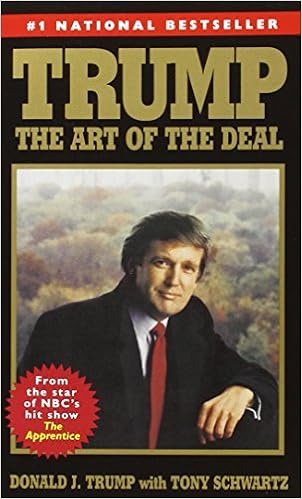 both business and entertainment thinking. He also seems to fully understand the pattern of political thinking and intentionally violates it. He doesn’t just avoid it, it aims to violate it and to use that violation for marketing. To understand the way he thinks, the following comes from his 1987 book, The Art of the Deal. What I find amazing is that just about everything he is doing today, he wrote and described some 29 years ago. And if you don’t know that he’s strategic in what he’s doing, you will probably think that he’s a wild-card, crazy, uninformed, etc. But reading the book again, I think it is intentional, planned, and highly strategic— the way he negotiates.
About political thinking:
“He was a politician, and he wanted to see which way the winds were blowing before he took a stand.” (108)
“I discovered that politicians don’t care too much what things cost. It’s not their money.” (111)
“Raise the possibility of bad press, even in an obscure publication, and most politicians will jump.” (306)
“Worst of all, no one in the city government bureaucracy is held accountable for the failure. … You don’t reward failure by promoting those responsible for it, because all you’ll get is more failure.” (322-323)
About business thinking:
“I like thinking big. I always have. To me it’s very simple: if you’re going to be thinking anyway, you might as well think big.” (46)
“I wasn’t satisfied just to earn a good living. I was looking to make a statement. I was out to build something monumental. … What attracted me was the challenge of building a spectacular development…” (47). “One of the keys to thinking big is total focus.”
“I’m a businessman, and I learned a lesson from that experience: good publicity is preferable to bad, but from a bottom-line perspective, bad publicity is sometimes better than no publicity at all. Controversy, in short, sells. So, it turned out, does glamour.” (176)
Long-term thinking: “I was prepared to be as patient— and as persistent– as I needed to be.” (252)
Strategic thinking: “You don’t act on an impulse—even a charitable one—unless you’ve considered the downside.” (264)
On negotiating and making deals:
“The best thing you can do is deal from strength, and leverage is the biggest strength you can have. Leverage is having something the other guy wants.” (53)
“I am very competitive and I’ll do nearly anything within legal bounds to win.” (108)
“There are times when you have to be aggressive, but there are also times when your best strategy is to lie back.” (223)
“I fight when I feel I’m getting screwed…” (236)
“Deals work best when each side gets something it wants from the other.” (335)
About marketing thinking:
“One thing I’ve learned about the press is that they’re always hungry for a good story, and the more sensational the better. T’s in the nature of the job … The point is that if you are little different, or a little outrageous, or if you do things that are bold or controversial, and my deals tend to be ambitious.” (56)
“When I talk with reporters is to be straight. I try not to deceive them or to be defensive, because those are precisely the ways most people get themselves into trouble.” (57)\
“The way I promote is bravado. I play to people’s fantasies. … a little hyperbole never hurts.” (58)
“… I understand now that certain events can take on a symbolic importance.” (175)
About Leadership:
“Leadership is perhaps the key to getting any job done. There wasn’t a single day when I didn’t check on the progress we were making on the rink. Most days, I visited the site personally.” (316)
Understanding Trump’s Thinking
Combining the patterns of business and entertainment thinking, a dominant aspect of Trump’s speech patterns is that of bigness. He is bigger than life and his vision is bigger than life. So he begins by exaggerating—using “universal quantifers” he states things so that they grab your attention, stops the presses, and dominates the news. When he does that, he’s “entertaining” and “marketing.” Then when he has stopped the presses and has an excited media all around him pushing in with questions, he calms down his statement.
Politicians on both sides don’t understand. They take each and every word, parse it, create a campaign against it— all the while Trump is on to the next thing to control the media cycle! In the end, he “sets the frame” or controls the agenda of the media and the others run around trying to use it for political gain. But it doesn’t seem to work. He’s having fun, saying many things in jest and because they are so serious, they get stupid in their counter-attacks.
In this, he is thinking about the larger picture, the long-term strategy, and they are caught up by short-term thinking. They think that the “bad press” he gets from throwing out some outrageous statement will be the end of him. But he embraces the bad press and uses it for all its worth. They are afraid to be politically incorrect. He embraces political incorrectness and mines it for all the publicity he can get.
From his top-rated TV show “The Apprentice” and “Celebrity Apprentice” he has demonstrated that he fully understands how to build drama, capture attention, create suspense, and use cliff-hanging drama to make his points. Now those shows were business shows. How boring, yet he turned them into one of the most highly watched and rated TV shows ever. The others don’t understand, nor does the media. They call him a clown, a showman, wild, dangerous— and he loves it. All of that plays right into his hands as it gets even more attention and larger crowds. People tune in to see what outrageous thing he will say! All the while the Establishment candidates complain that they can’t get any air time.
Yet behind all of that entertainment is a business man who looks at things through the lens of cost, productivity, results, and effectiveness. How it will all turnout—who knows? There’s no predicting, we just have to wait to see. Yet so far, Trump has certainly been a game changer in the field of politics. He is breaking all the rules of the old political game and breathing new air into the whole process.
Post Note:
I wrote the above last week and before Trump’s boycott of tonight’s debate. My take on it is that he is, again, negotiating. It’s risky, it’s outside every political box that people have thought in, and it is absolutely fascinating to see what will come of it. From a psychological and neuro-semantic perspective—it is very different thinking and framing! And certainly, “he who sets the frame controls the game.”
What is Neuro-Semantic NLP?
Neurons: Get your free subscription to the weekly International \Post on Neuro-Semantics by Dr. L. Michael Hall.
Many thanks, Shelle, for sharing Mr Hall’s observations. His analysis of Mr Trump, in particular, is helpful for us in the UK.
The final comment on ‘framing’ reminds me of book by Oren Klaff – ‘Pitch Anything’ which devotes a key chapter to “frame control.” Clearly, Trump is a master.
A less aggressive approach is to ask questions, of course.
Shelle,
Thanks for sending this article. Dr. Hall has written this so articulately – clearly, simply – that someone who has never heard of NLP is given a clear picture of of it as well as many good examples to back them up. The article has reminded me of things I once learned and have forgotten.
I plan to send this to some of my friends and colleagues.
Thinking with a purpose vs. thinking authentically or both?
Hi Shelle,
Hope all is well and this email finds you in good good spirits.
Thank you for sharing “Ways of Thinking” by your friend Michael.
I enjoyed it because at allowed me to understand more how words reflect our thoughts which reflect who we are which reflect our experiences and therefore our own maps. It’s all making more sense.
The Trump stuff is always fascinating on so many levels.
Thank you Shelle for posting this. Once again speech patterns set out masterly by Michael Hall. I would like to send it to one or two people – where do get consent to do so? It also helps to see the parallels in our one South African politician’s speeches – Julius Malema. A politician, but talking like Trump – hitting straight home. Radical, but he is attracting attention! He has woken up the whole National Assembly!
Congratulations to Michael Hall for this valuable article.
Great article. It’s funny, I had posted it at a certain NLP Facebook discussion group – and it was deleted. It takes either the right group or the right person to post it and stay. And that’s one thing I love about Hall, he writes about subjects that some NLPers just can’t handle.
HI Shelle,
Great post.
I had been thinking about his language also but not to the depth Michael has. Reminds me to go deeper.
Thanks
Terry
I would like to know what Dr. Hall feels now, maybe write After the GOP convention.